5 Mistakes to Avoid When Moving
Moving to a new home is one of the most stressful experiences a person can go through. Between packing, coordinating logistics, and adjusting to a new environment, it is easy to make costly errors that could have been avoided with a little planning. Whether you are moving across town or across the country, being aware of the most common mistakes can save you time, money, and a great deal of frustration. Here are five critical mistakes to avoid when moving.
Mistake #1: Not Planning Far Enough in Advance
One of the biggest mistakes people make when moving is waiting too long to start the process. Moving requires careful coordination of many moving parts, and last-minute planning almost always leads to problems.
Why Early Planning Matters
Professional moving companies book up quickly, especially during peak moving seasons like summer and the end of the month. If you wait too long, you may find that your preferred movers are unavailable, leaving you scrambling for alternatives that may be more expensive or less reliable.
What to Do Instead
Start planning your move at least six to eight weeks in advance. Create a moving checklist that covers everything from booking movers and gathering packing supplies to notifying your utility providers and updating your address with important institutions. A written timeline keeps you on track and reduces the chances of forgetting critical tasks.
Give yourself extra time to sort through your belongings before packing. Decluttering before a move can significantly reduce the number of boxes you need to pack and transport, which in turn lowers your overall moving costs.

Mistake #2: Underestimating the Cost of Moving
Moving is rarely as cheap as people expect. Many individuals budget only for the moving truck or professional movers, completely overlooking a long list of additional expenses that can add up quickly.
Hidden Costs People Frequently Overlook
Packing supplies such as boxes, tape, bubble wrap, and packing paper can cost more than you might expect. If you are moving long distance, you will also need to factor in travel costs, meals, and potentially hotel stays. There may also be costs associated with cleaning your old home, setting up utilities at your new residence, or purchasing new furniture that fits the new space.
How to Build a Realistic Moving Budget
Research the full range of potential expenses before you finalize your budget. Get at least three quotes from different moving companies to understand the market rate. Ask movers specifically about any additional fees that may apply, such as charges for stairs, long carry distances, or bulky items. Set aside a contingency fund of at least ten to fifteen percent of your total estimated budget to cover unexpected expenses.
Keep receipts for all moving-related purchases. In some cases, moving expenses may be tax deductible, particularly if you are relocating for work purposes. Consult a tax professional to find out what applies to your situation.
Mistake #3: Hiring the Wrong Moving Company
Not all moving companies are created equal. Choosing the wrong one can lead to damaged belongings, unexpected charges, or in extreme cases, outright fraud. This is one of the most consequential mistakes a person can make during a move.
Red Flags to Watch Out For
Be cautious of moving companies that demand large cash deposits upfront, offer quotes that seem unrealistically low, or fail to conduct an in-home or virtual survey before giving an estimate. Rogue movers sometimes hold belongings hostage and demand inflated payments before delivering them. This is a real and documented problem that affects thousands of people each year.
How to Verify a Moving Company
Always check whether a moving company is properly licensed and insured. For interstate moves in the United States, movers are required to be registered with the Federal Motor Carrier Safety Administration (FMCSA) and should have a valid USDOT number. You can verify this information on the FMCSA website.
Read online reviews from multiple sources, including Google, Yelp, and the Better Business Bureau. Ask friends and family for personal recommendations whenever possible. A trustworthy moving company will be transparent about its pricing, policies, and credentials.
Mistake #4: Packing Improperly or Inefficiently
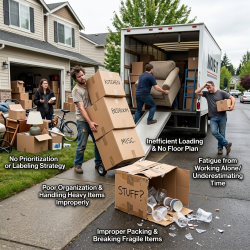
Poor packing is a major source of frustration and financial loss during a move. Improperly packed boxes can collapse, items can break, and disorganized packing makes unpacking a nightmare. Taking the time to pack correctly is well worth the effort.
Common Packing Errors
Many people make the mistake of using boxes that are too large for heavy items like books or kitchen appliances. Overfilled boxes are difficult to carry and prone to breaking. Conversely, using boxes that are too small for lightweight but bulky items wastes space and increases the total number of boxes needed.
Another frequent error is failing to label boxes clearly. When every box simply says "miscellaneous," unpacking becomes a chaotic and time-consuming process. People also commonly neglect to wrap fragile items individually, leading to broken dishes, glassware, and decorative items.
Best Practices for Efficient Packing
Pack heavy items in small boxes and lighter items in larger ones. Use wardrobe boxes for hanging clothes to avoid wrinkling. Wrap fragile items in bubble wrap or packing paper and clearly mark those boxes as "fragile." Label every box with its contents and the room it belongs in at the new home.
Pack an essentials box that you keep with you during the move. This box should contain items you will need immediately upon arriving at your new home, such as toiletries, a change of clothes, important documents, phone chargers, medications, and basic kitchen supplies. Having these items easily accessible prevents you from having to dig through dozens of boxes on your first night.
Mistake #5: Neglecting to Update Your Address and Important Records
After the physical move is complete, many people forget to take care of the administrative side of moving. Failing to update your address with the right organizations can lead to missed bills, lost mail, and complications with government services.
Who Needs to Know Your New Address
The list of institutions and individuals who need your updated address is longer than most people realize. At a minimum, you should notify the United States Postal Service, your bank and credit card companies, your employer, the IRS, your insurance providers, your doctor and other healthcare providers, subscription services, and any government agencies that send you important correspondence.
Do not forget to update your address on your driver's license and vehicle registration. Most states require residents to update their driver's license within a set number of days after moving, and failure to do so can result in fines. Voter registration should also be updated to ensure you can participate in local elections.
How to Stay Organized During the Transition
File a change of address form with the USPS as soon as your move date is confirmed. This service forwards mail from your old address to your new one for a period of time, giving you a safety net while you update your address elsewhere. However, it is not a permanent solution, so be proactive about contacting each institution directly.
Create a list of every organization you need to notify and check them off as you go. Many banks and subscription services allow you to update your address online, making the process faster and more convenient. Try to complete all address updates within the first two weeks of moving into your new home.
Final Thoughts
Moving does not have to be an overwhelming experience. By planning well in advance, building a realistic budget, choosing a reputable moving company, packing smartly, and keeping your personal records up to date, you can avoid the most common pitfalls that make moving unnecessarily difficult. A little preparation goes a long way toward ensuring that your move is as smooth and stress-free as possible.
Related Articles
5 Mistakes to Avoid When Moving
Moving to a new home is one of the most stressful experiences a person can go through.
Recent Articles
-

Cervical Cancer: Warning Signs & Treatment
Cervical cancer is one of the most common cancers affecting women worldwide, yet it is also one of the most preventable and treatable when detected ea ...
-

5 Overlooked Lung Cancer Warning Signs
FACTS Health & Wellness EditionLung cancer is the leading cause of cancer-related deaths worldwide, responsible for approximately 1.8 million deaths e ...
-

7 Warning Signs of Breast Cancer
Breast cancer is one of the most common cancers affecting people worldwide. According to the World Health Organization, it is the most frequently diag ...